What Are the Best Steel Containers Made in China?

Time:2026-10-14 Author:Isabella
0%

Choosing the best Steel Containers made in China requires more than comparing prices. Buyers should examine steel grade, welding quality, coating thickness, load ratings, and factory traceability. A container may look strong under warehouse lights, yet fail after repeated lifting, salt exposure, or uneven stacking. That difference matters.

China produced approximately 1.019 billion tonnes of crude steel in 2023, representing about 54% of global output, according to World Steel in Figures 2024 from the World Steel Association. This scale supports competitive manufacturing, but volume alone does not prove quality. ISO 668 and ISO 1496-1 provide essential reference points for container dimensions, strength, testing, and handling performance. UNCTAD’s Review of Maritime Transport also shows the continuing importance of containerized trade, where equipment reliability affects ports, carriers, and cargo owners.

Edwin Basson, Director General of the World Steel Association, has stated, “Steel is the most recycled material in the world.” That principle strengthens the case for durable steel construction and responsible material sourcing. Still, the best Chinese supplier depends on the application. Food-grade storage, industrial transport, modular buildings, and offshore use require different specifications. Ask for mill certificates, welding records, coating data, inspection reports, and recent project references. Factory audits help.

No ranking is perfect. Some suppliers communicate well but provide weak documentation. Others offer excellent engineering with slower customization. This guide compares practical evidence, not promotional claims, to identify Chinese Steel Containers that balance strength, compliance, service life, and total cost.
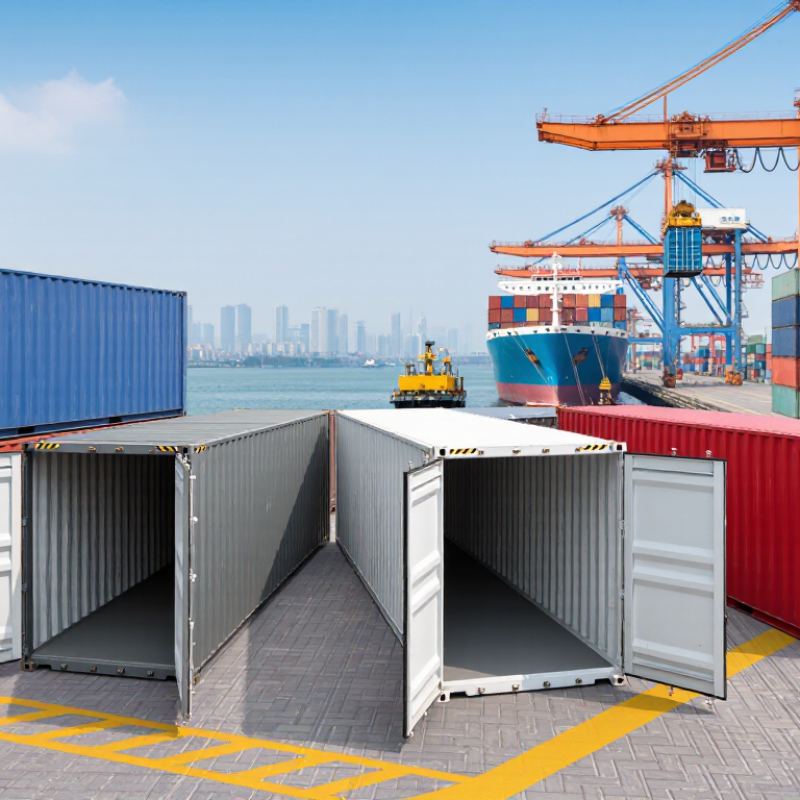
What Are the Best Steel Containers Made in China?

What Defines a High-Quality Steel Container?

A high-quality steel container made in China begins with traceable materials, accurate dimensions, and disciplined manufacturing.

The steel should have consistent thickness and proper strength for repeated lifting, stacking, and transport. Factory records should identify the material source, production batch, welding team, and inspection results. This information makes quality easier to verify.

Welds deserve close attention. Clean, continuous welds reduce the risk of water entry and structural weakness. Inspectors should check corners, door frames, roof joints, and underfloor supports carefully.

The doors should open smoothly, close evenly, and compress their seals without excessive force. A durable protective coating also matters. Proper surface preparation, primer, and topcoat help resist rust near ports and humid storage areas. The floor should feel firm underfoot, without soft spots or uneven panels.

Tips: Ask for coating thickness records, weld inspection reports, and dimensional tolerances. Check a sample container in person when possible. Small details reveal more than polished photographs.

Quality control is not always perfect. Even a well-managed factory can miss a damaged seal or uneven coating. That is why independent inspection remains valuable.

A reliable supplier should welcome reasonable testing, explain limitations honestly, and provide clear maintenance guidance. Good steel containers are not defined by appearance alone. Their reliability appears in the joints, hinges, floor supports, and documentation.

Key Types of Steel Containers Manufactured in China

China manufactures several steel container types for different working conditions. Standard dry freight containers remain a familiar choice for cargo protection. They use corrugated steel panels, locking doors, and reinforced corner fittings. High-cube versions provide extra internal height for bulky cartons or equipment. Open-top containers suit tall loads that cannot pass through standard doors. Side-opening designs improve access when forklifts work along a long wall. Their value depends on weld quality, coating thickness, and dimensional accuracy, not appearance alone.

Storage containers are commonly adapted for construction sites, farms, warehouses, and inventory protection. They may include ventilation, personnel doors, shelving, or internal partitions. Roll-off containers support material handling, with thicker floors and lifting rails. Tank containers are another specialized category for approved liquids. Buyers should verify material compatibility, pressure ratings, and inspection records. Food-related use requires cleanable interiors and traceable manufacturing controls. A polished surface does not prove hygienic production. That detail is easy to miss.

Tips: Request drawings, steel grades, load ratings, coating data, weld inspection records, and finished-unit photographs. Measure door clearance and corner fittings before shipment. Ask how repairs are handled. Small documentation gaps can create expensive delays. Compare each container with the actual route, climate, payload, and handling equipment. Coastal transport needs stronger corrosion protection than indoor storage. Check drainage, floor treatment, gasket quality, and locking-bar movement. Some impressive specifications add little value in daily use. The best container is not always the heaviest one. Mistakes still happen.

What Are the Best Steel Containers Made in China? – Key Types of Steel Containers Manufactured in China
Container Type Typical External Dimensions Typical Internal Capacity Common Payload Range Main Construction Features Typical Applications Relevant Standards or Requirements
20-Foot General-Purpose Dry Container Length: 6,058 mm
Width: 2,438 mm
Height: 2,591 mm
Approximately 33 m³
Internal length: about 5,898 mm
Up to approximately 28,000 kg, depending on tare weight and the certified gross mass Corten or weathering steel panels, corrugated side walls, steel floor frame, locking bars, and double cargo doors General cargo, machinery, packaged goods, spare parts, and export freight ISO 668 dimensional requirements; CSC safety approval for international sea transport
40-Foot General-Purpose Dry Container Length: 12,192 mm
Width: 2,438 mm
Height: 2,591 mm
Approximately 67 m³
Internal length: about 12,032 mm
Usually up to approximately 28,000–29,000 kg, subject to the container’s rating Weathering-steel body, reinforced corner posts, corrugated panels, steel underframe, and cargo-door locking system High-volume cargo, pallets, textiles, furniture, industrial products, and retail goods ISO 668 and ISO 1496-1 dimensional and strength requirements; CSC plate required for international use
40-Foot High-Cube Dry Container Length: 12,192 mm
Width: 2,438 mm
Height: 2,896 mm
Approximately 76 m³
Internal height: about 2,698 mm
Usually up to approximately 28,000–29,000 kg, depending on the design rating Similar to a standard dry container, with an additional 305 mm of external height for increased cubic capacity Lightweight and bulky cargo, household goods, packaging materials, and volume-sensitive shipments ISO 668 high-cube dimensional requirements and CSC safety certification
Open-Top Container Commonly based on 20-foot or 40-foot dimensions
Height: approximately 2,591 mm
Approximately 32–65 m³, depending on length and roof arrangement Commonly up to approximately 26,000–30,000 kg, subject to rating Removable tarpaulin or detachable roof bows, reinforced top rails, and doors suitable for crane or grab loading Stone, scrap metal, timber, industrial equipment, and cargo that must be loaded from above ISO container dimensions; cargo securing and CSC requirements apply to international transport
Flat Rack Container Commonly 20-foot or 40-foot length
Width: approximately 2,438 mm
Height: varies by design
Open platform; no enclosed internal volume Often approximately 25,000–40,000 kg, depending on the frame and concentrated-load rating Heavy-duty steel platform, fixed or collapsible end walls, reinforced corner castings, and lashing rings Oversized machinery, steel coils, vehicles, construction equipment, and heavy project cargo ISO 668 dimensions, ISO 1496-5 requirements, CSC approval, and certified lashing points
Refrigerated Container Commonly 20-foot or 40-foot high-cube format
External width: 2,438 mm
40-foot high-cube height: 2,896 mm
Approximately 28–67 m³, depending on length, insulation, and machinery arrangement Often approximately 25,000–29,000 kg, subject to equipment tare weight and rating Insulated stainless-steel or coated-steel interior, insulated walls and floor, electric refrigeration unit, and controlled-airflow system Frozen foods, fresh produce, pharmaceuticals, chemicals requiring temperature control, and sensitive cargo ISO 1496-2, CSC requirements, electrical safety rules, and applicable food or pharmaceutical transport procedures
ISO Tank Container Usually a 20-foot frame
Length: approximately 6,058 mm
Width: 2,438 mm
Height: generally below 2,591 mm
Common tank volume: approximately 14,000–26,000 litres Depends on liquid density, tank volume, tare weight, and maximum gross mass Stainless-steel pressure vessel mounted inside a steel ISO frame, with valves, manways, safety devices, and grounding provisions Food-grade liquids, chemicals, liquefied gases, hazardous liquids, and bulk industrial materials ISO 1496-3, applicable pressure-vessel rules, ADR, IMDG Code, RID, or other dangerous-goods regulations as required
Steel Industrial Drum Common nominal sizes:
20 L, 25 L, 60 L, 120 L, and 210 L
Nominal capacity is generally equal to the listed drum size Depends on the product density and drum specification Cold-rolled steel or carbon-steel body, welded or seamed construction, removable or fixed head, reinforcing hoops, and internal coating when required Lubricants, coatings, solvents, chemicals, oils, powders, and industrial raw materials UN performance certification may be required for hazardous materials; ISO 15750 is commonly referenced for steel drums
Steel Pail Common nominal sizes:
5 L, 10 L, 18 L, 20 L, and 25 L
Nominal capacity is generally equal to the listed pail size Depends on filling material and closure design Light-gauge steel body, tight-head or open-head construction, fitted lid, sealing gasket, handle, and optional internal lining Paints, adhesives, coatings, lubricants, powders, and small-volume chemical products UN certification, closure testing, and chemical compatibility requirements may apply to regulated products
Steel Gas Cylinder Dimensions vary according to water capacity and working pressure; common industrial sizes range from approximately 10 L to 50 L water capacity Gas capacity depends on the gas type, filling pressure, and cylinder water volume Determined by the cylinder design pressure and gas-filling regulations Seamless or welded steel pressure vessel, neck thread, valve protection cap, protective collar, and permanent markings Oxygen, nitrogen, carbon dioxide, argon, compressed air, and other industrial or medical gases Applicable national pressure-vessel standards, TPED, DOT, GB standards, or other approval systems required by the destination market
Steel Storage Container or Site Office Common modular lengths: 3 m, 6 m, and 12 m
Typical width: approximately 2.4 m
Approximately 15–70 m³, depending on the module length and layout Not normally rated as a shipping payload container; structural and floor-load limits are project-specific Welded steel frame, insulated wall and roof panels, steel floor, doors, windows, electrical fittings, and optional sanitary modules Construction-site offices, workshops, temporary storage, guard rooms, classrooms, and accommodation units Local building codes, structural-load calculations, fire-safety requirements, and electrical regulations
Dimensions, payloads, capacities, materials, and certifications are typical industry ranges. Exact specifications vary by manufacturer, steel grade, tare weight, cargo requirements, destination regulations, and the applicable certification system. For international shipping, the certified maximum gross mass shown on the container safety approval plate takes precedence.

Materials, Construction Methods, and Safety Standards

The best steel containers made in China begin with the correct material, not attractive paint. Stainless steel grades such as 304 suit many general storage uses. Grade 316 offers stronger resistance in salty or chemically aggressive environments. Carbon steel can provide high strength at lower cost, but it needs reliable coating protection. Material certificates should show grade, thickness, heat number, and test results. Small details matter.

Construction quality depends on forming, welding, sealing, and surface treatment. During a factory inspection, I would check whether plates remain even after bending. Uneven corners can trap moisture and weaken cleaning routines. Continuous welds should look smooth, consistent, and free from visible pores or cracks. Critical seams may require dye-penetrant, ultrasonic, or radiographic testing. Gaskets must match the stored material and operating temperature. A tight lid is useful, but it cannot repair poor alignment.

Safety verification should match the container’s actual purpose. Food-contact units need hygienic surfaces and traceable materials. Outdoor units need corrosion testing and secure drainage. Containers exposed to pressure require specialized design review and documented testing. Applicable GB/T, ISO, ASTM, or EN requirements may differ by market and use. Ask for inspection records, not only certificates. A certificate can be current while production quality changes later. No checklist is perfect. Even a clean-looking container may hide a weak weld, so independent inspection remains worth considering.

Leading Applications Across Industrial and Commercial Sectors

What are the best steel containers made in China? The answer depends on the application, not only the wall thickness. Industrial users commonly need cargo containers, storage units, workshop modules, and protective enclosures. Commercial projects often require retail kiosks, site offices, archive rooms, and temporary accommodation. According to the World Steel Association’s World Steel in Figures 2024, global crude steel production reached about 1.89 billion tonnes in 2023. This scale supports broad material choices, but quality still depends on steel grade, welding accuracy, coating control, and inspection records.

For international transport, buyers should check compliance with ISO 668 and ISO 1496 dimensions and performance requirements. UNCTAD’s Review of Maritime Transport 2024 reports that global container port throughput remained above 850 million TEUs in 2023. Containers therefore face repeated lifting, vibration, salt air, and uneven handling. Corner fittings, floor strength, door alignment, and drainage details deserve close inspection. A thick coating alone is not enough. Poor preparation can leave rust beneath a bright surface.

In factories, steel containers support tool storage, chemical-free material handling, maintenance rooms, and mobile equipment shelters. In commercial settings, insulated panels and ventilation improve comfort, especially in hot regions. Fire resistance and load calculations should be documented by qualified engineers. Some buyers focus too heavily on price. That can be a costly mistake. The most reliable supply process includes weld testing, dimensional checks, coating-thickness reports, and sample approval before production. Even then, no container is perfect; site conditions and maintenance can change its service life.

How to Evaluate Chinese Steel Container Manufacturers

What Are the Best Steel Containers Made in China?

Evaluating Chinese steel container manufacturers requires more than comparing prices. UNCTAD’s Review of Maritime Transport 2024 states that over 80% of global merchandise trade by volume moves by sea. Container failure can therefore affect handling, storage, and delivery schedules. A credible supplier should provide ISO 668 and ISO 1496 compliance evidence, not vague statements about “international standards.”

Check the steel source first. World Steel Association data shows China produced about 1,005 million tonnes of crude steel in 2024. Large output does not automatically mean consistent container quality. Request heat numbers, mill certificates, coating specifications, and weld procedure records.

Inspect corner castings, door seals, floor support spacing, and drainage holes. These small details reveal production discipline. A factory tour helps, but it can also mislead.

Ask for independent inspection before shipment. Test lifting points, door operation, dimensional tolerance, and payload performance against approved drawings.

The manufacturer should maintain traceability from steel coil to finished unit. Look for calibrated testing equipment and clear corrective-action records.

A low quotation may exclude corrosion protection, repairs, or inspection costs. That deserves careful questioning. Some suppliers show impressive samples while offering weak after-sales support.

Check references from comparable climates and cargo applications, then review warranty terms in writing. Photographs are useful, but raw inspection records are stronger evidence.

FAQS

What materials indicate a high-quality steel container?

Traceable steel is a strong starting point. Material records should show grade, thickness, heat number, and test results. Stainless steel suits many storage conditions. Carbon steel costs less but needs dependable coating protection. Large steel output does not guarantee consistent quality.

How should welds be inspected?

Check corners, door frames, roof joints, and underfloor supports. Good welds look continuous, clean, and free from visible pores or cracks. Critical seams may need dye-penetrant, ultrasonic, or radiographic testing. A clean appearance can still hide weakness.

What should buyers check on container doors?

Doors should open smoothly and close evenly. Seals should compress without excessive force. Inspect hinges, locking points, frames, and gasket alignment. Try the door several times. Small resistance may reveal poor fitting.

Why do coatings and surface preparation matter?

Proper preparation helps prevent rust in humid storage areas. Ask for primer type, topcoat details, and coating thickness records. Inspect corners, welds, and the underside carefully. Paint alone is not protection.

How can the floor quality be evaluated?

Walk across the floor and check for soft spots or movement. Panels should remain level and feel firm underfoot. Inspect support spacing beneath the floor. Uneven panels may collect water or complicate cleaning. This simple check is not perfect.

Which documents should a manufacturer provide?

Request material certificates, production batches, weld records, and inspection results. Dimensional tolerances should match approved drawings. Coating reports and corrective-action records are also useful. Ask for current records. A certificate may not reflect later production changes.

Is an independent inspection worth arranging?

Yes, especially before shipment. Inspectors can test lifting points, door operation, dimensions, drainage, and payload performance. They may notice a damaged seal or uneven coating. Factory tours help, but they can sometimes create false confidence.

How should buyers compare manufacturers beyond price?

Compare traceability, construction quality, testing, warranty terms, and after-sales support. Ask for references involving similar climates and cargo uses. A low quotation may exclude repairs or corrosion protection. Cheap can become expensive. Photos are useful, but raw inspection records provide stronger evidence.

Conclusion

High-quality Steel Containers are defined by durable materials, precise fabrication, reliable sealing, and a design that supports safe handling, stacking, and long-term use. Manufacturers in China produce a wide range of options, including storage containers, shipping units, tanks, site offices, and customized industrial enclosures. Their performance depends on appropriate steel grades, corrosion-resistant treatments, reinforced frames, accurate welding, and strict quality inspections. Safety features such as secure doors, ventilation, load-bearing capacity, and compliance with relevant international standards are also essential.

These containers serve many industrial and commercial purposes, including logistics, construction, warehousing, manufacturing, agriculture, and emergency storage. When evaluating a Chinese manufacturer, buyers should review production capabilities, material traceability, engineering expertise, customization options, inspection procedures, certifications, delivery reliability, and after-sales support. A capable supplier should communicate clearly, provide detailed specifications, and demonstrate consistent quality through samples, testing records, and transparent manufacturing processes.

Isabella

Isabella

Isabella is a dedicated marketing professional with a sharp focus on driving brand growth and engagement through strategic content creation. With an extensive background in digital marketing, she combines her passion for storytelling with her keen understanding of industry trends to deliver......