Global supply chains are becoming faster, more fragmented, and less predictable. Inventory arrives in mixed cartons, different quantities, and tighter delivery windows. These conditions expose weaknesses in conventional shelving and manual picking routines. The 2024 MHI Annual Industry Report identifies continued investment in supply chain technology as a major priority for logistics leaders. Its findings also reflect growing interest in automation, data visibility, and adaptable warehouse processes. However, technology investment alone cannot correct poor slotting or unclear replenishment rules. The floor still matters.
Carton Flow Storage offers a practical link between operational discipline and scalable warehouse performance. Gravity-fed lanes move cartons toward the picking face, while rear loading supports organized replenishment. Workers can see fast-moving items immediately, reducing unnecessary walking and search time. A replenishment team may load sealed cases behind the pickers during a busy afternoon. That simple separation can protect picking continuity. It is not a universal answer.
DHL’s Logistics Trend Radar 7.0 highlights automation, robotics, and operational resilience as important forces shaping logistics. Carton Flow Storage supports these goals without requiring every facility to begin with complex robotics. It can improve FIFO handling, increase pick-face density, and create clearer visual controls for supervisors. Yet results depend on SKU dimensions, carton quality, lane depth, and accurate demand data. An overloaded lane creates friction. A poorly sized carton can stop the flow.
For global operators, the stronger question is not whether the system looks efficient. It is whether the design remains reliable across countries, products, labor conditions, and seasonal peaks. Careful testing remains essential. A well-engineered Carton Flow Storage solution can provide measurable gains, but thoughtful review should come before rapid expansion.
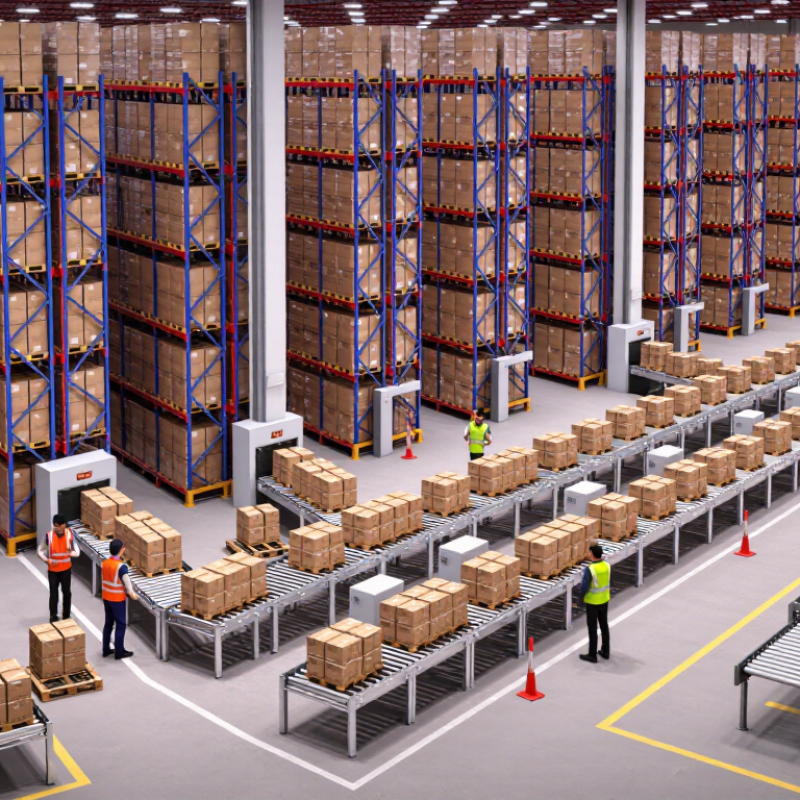
Carton flow storage is a dynamic shelving system designed for fast-moving cartons and totes. Each lane uses slightly inclined rollers or wheels. Gravity moves cartons from the loading side toward the picking side. Workers add stock at the rear and pick products from the front.
This arrangement supports a clear first-in, first-out rotation. It can help reduce searching, walking, and handling time in distribution centers. A worker may see the next carton arrive smoothly after removing the front one. Labels remain visible, and separate lanes can represent different stock-keeping units, order zones, or destinations.
Small details matter. Carton size, weight, and base quality affect how reliably products move. Uneven packaging may stop halfway. Dust can also reduce roller performance. In practice, careful lane testing is essential before full installation. Carton flow storage is not suitable for every product, especially irregular packages or slow-moving inventory. I have seen layouts appear efficient on paper but create awkward replenishment paths. Adjustable dividers and routine inspections can correct some problems, though they require discipline. A well-planned system connects storage design with real picking habits, order volume, and supply chain changes.
Carton flow storage uses inclined rollers or wheels inside shelving lanes. Gravity moves cartons from the rear toward the picking side. Workers replenish stock behind the rack and pick from the front. Gravity does the work.
The system naturally supports first-in, first-out movement. Removing the front carton allows the next carton to roll forward. This can help manage dated goods and reduce older stock being overlooked. It is not automatic perfection.
Fast-moving cartons, totes, small parts, and regularly shaped packages often work well. Products should have stable bases and suitable weights. Separate lanes can hold different items or destinations. Test real packaging.
Irregular, weak, oversized, or slow-moving packages may perform poorly. A soft carton can bend on the rollers. Uneven packaging may stop halfway. Some products simply need another storage method.
Workers can pick from a clear front-facing location. Visible labels may reduce searching and walking. Rear replenishment also separates stocking from picking. The route becomes shorter, sometimes.
It can support distribution centers, assembly areas, online order operations, cold storage, and regional hubs. Lanes may handle replenishment, temporary staging, or cross-docking. Temperature, visibility, and product movement still matter.
Teams should test carton size, weight, base quality, and movement speed. Testing should include busy periods and realistic replenishment patterns. Check lane capacity and picking accuracy. Paper plans can mislead.
Inspect rollers, dividers, labels, and lane conditions regularly. Dust can reduce roller performance. Adjustable dividers may correct shifting cartons. Inspections require discipline, and neglected systems can age badly.
Carton Flow Storage is a dynamic shelving solution designed to improve the organization, accessibility, and movement of cartonized goods within warehouses and distribution centers. Using inclined lanes with rollers or wheels, cartons are loaded from the replenishment side and move forward as inventory is picked from the opposite side. This first-in, first-out flow helps maintain stock rotation, reduces unnecessary travel, and gives operators a clear view of available inventory.
Across global supply chains, carton flow systems can support order picking, staging, kitting, and high-frequency product handling in industries with varied storage needs. Their main advantages include better space utilization, more accurate inventory control, faster picking, and improved workplace efficiency. Successful implementation requires evaluating carton size, product weight, demand patterns, replenishment methods, aisle design, and safety requirements. Regular inspections, thoughtful labeling, and employee training are also essential to maintain reliable performance as operational volumes and product mixes change.

 Hedaracking