China Top Push Back Storage Suppliers How to Choose?

Time:2026-10-09 Author:Charlotte
0%

Choosing China’s top Push-Back Storage suppliers requires more than comparing prices. The right decision connects pallet density, product movement, safety, and long-term service. MHI’s 2024 Annual Industry Report surveyed more than 1,000 supply-chain professionals. It found that 55% planned to increase technology investment. This signals a clear shift toward smarter warehouse planning and measurable efficiency.

Gwynne Richards, author of Warehouse Management, describes the core responsibility clearly: “Warehouse management is the process of managing the movement and storage of goods within a warehouse.” His principle applies directly to Push-Back Storage. A reliable supplier should understand how pallets move, not only how racks look. Ask for load-capacity calculations, trolley specifications, steel thickness, aisle requirements, and installation records. Request project photos. Inspect the details.

A practical supplier comparison should also examine engineering support, corrosion protection, replacement parts, and after-sales response time. Grand View Research identifies warehouse automation and storage efficiency as continuing growth areas, driven by limited space and rising fulfillment expectations. However, growth does not guarantee quality. A lower quotation may hide weaker components or unclear service terms. No supplier is perfect. Even an experienced buyer can overlook product turnover patterns or forklift behavior. Measure those risks before signing. The strongest China Push-Back Storage supplier offers documented testing, transparent communication, and a design that fits your actual warehouse—not a standard drawing.
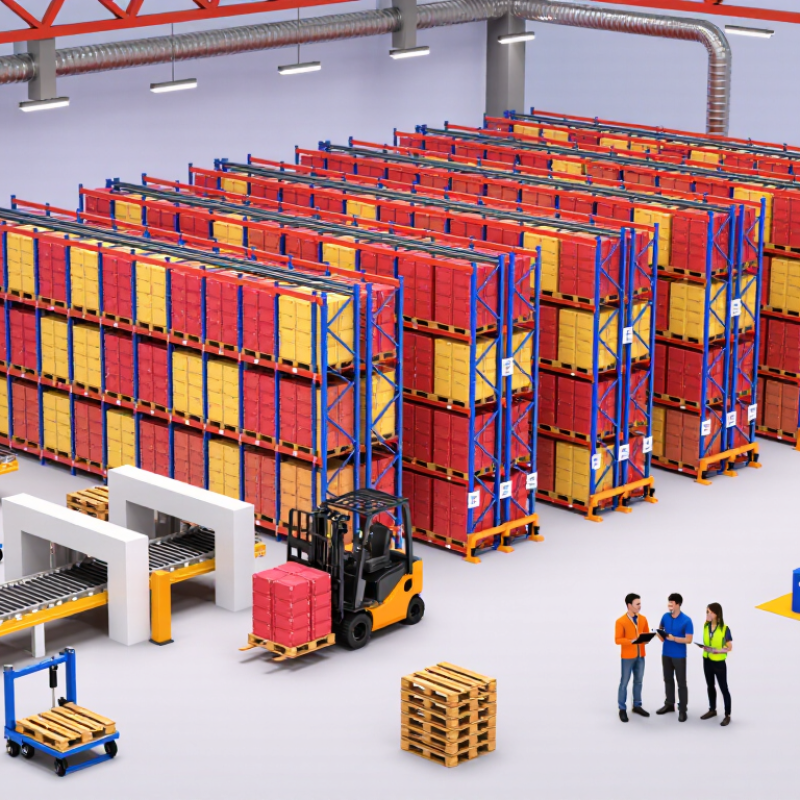
China Top Push Back Storage Suppliers How to Choose?

What Is Push-Back Storage and How Does It Work?

Push-back storage is a high-density pallet system for similar products with several stock-keeping units (SKUs). It uses inclined lanes, nested carts, and gravity. A forklift loads the front position, then pushes each pallet deeper. When an operator removes the front pallet, the next pallet rolls forward. Loading and picking happen from one aisle. That separation reduces travel, but it does not provide first-in, first-out rotation.

The mechanism is simple. The design is not. The 2024 MHI Annual Industry Report found that 55% of supply-chain professionals expect greater automation investment within five years. Push-back systems can support that direction, but only after measuring pallet dimensions, load weights, and turnover patterns.

A warehouse assessment should record aisle width, beam deflection, cart friction, and forklift visibility. These details decide whether lanes move smoothly or jam. The 2023 State of Logistics Report measured U.S. logistics costs at 12.7% of GDP. Density matters. So does access.

A practical supplier comparison should request load calculations, seismic assumptions, cycle testing, and installation references. Ask how the supplier controls rail alignment and protects frames from impact. A claimed 60% space saving may sound attractive, yet results vary with pallet size and empty positions.

I would treat that figure as a design hypothesis, not a promise. That is where purchasing decisions become too optimistic. China-based manufacturing can be capable, but weld quality, coating thickness, inspection records, and after-sales response deserve equal attention. Test one lane with real pallets before approving a full installation.

Why Choose Chinese Push-Back Storage Suppliers?

Chinese push-back storage suppliers offer a practical mix of manufacturing experience, design flexibility, and competitive production costs. Their factories often produce steel frames, nested carts, rollers, and safety components in the same facility. This can shorten coordination time. Details matter. In warehouse projects, suppliers can adjust lane depth, pallet size, and aisle width to match real operating conditions.

A reliable supplier should provide clear drawings, load ratings, steel specifications, surface-treatment details, and installation guidance. Ask for test records and photos from completed warehouse installations. During a factory audit, inspect welding quality, coating consistency, roller movement, and export packaging. A serious technical team explains limitations instead of promising everything. That attitude shows professional knowledge.

Chinese suppliers can also support custom layouts and phased orders. However, communication may become difficult when technical terms are translated poorly. I have seen small drawing changes cause unnecessary production delays. Use approved drawings, written specifications, and sample confirmation before manufacturing. Request staged inspections, especially for frame dimensions and loading tests. The lowest quotation may exclude reinforcement, spare parts, or careful packaging. A dependable supplier makes these details visible, even when the discussion feels less convenient.

China Top Push Back Storage Suppliers How to Choose? - Why Choose Chinese Push-Back Storage Suppliers?

Evaluation Dimension Typical Industry Data or Range Why It Matters What to Confirm with a Chinese Supplier
Storage Configuration Typically 2–6 pallets deep per lane; a gravity-fed cart system uses nested pallets on inclined rails. Determines storage density, picking sequence, and compatibility with last-in, first-out or first-in, first-out workflows. Lane depth, pallet dimensions, pallet condition, operating method, and required loading sequence.
Load Capacity Common pallet positions are engineered for approximately 500–1,500 kg per pallet, depending on beam spacing, rail design, and frame configuration. Insufficient capacity can cause rail deformation, frame damage, or unsafe pallet movement. Rated load per pallet position, uniformly distributed load assumptions, safety factor, and load-test documentation.
Rack Height and Aisle Efficiency Push-back systems commonly use multi-level rack layouts, with height limited by building clearance, forklift reach, pallet stability, and local regulations. Higher utilization can reduce floor-space requirements, while insufficient clearance may restrict safe handling. Clear ceiling height, sprinkler clearance, forklift turning radius, aisle width, and seismic or wind requirements.
Material and Surface Protection Structural components are generally manufactured from formed or rolled steel; painted, powder-coated, or galvanized finishes are commonly available. Material grade and coating quality affect durability, corrosion resistance, and long-term maintenance. Steel grade, coating thickness, surface-preparation process, corrosion environment, and finish inspection method.
Safety and Quality Compliance Warehouse-racking requirements vary by destination; widely referenced frameworks include EN 15512, EN 15629, FEM guidance, RMI specifications, and applicable local building codes. Compliance helps verify structural design, installation practices, inspection procedures, and workplace safety. Applicable standard, engineering calculations, weld and coating inspection records, installation method statement, and third-party testing where required.
Customization Capability Common adaptations include pallet size, lane depth, trolley or roller design, guide rails, safety locks, guards, and forklift-access arrangements. A customized layout can improve compatibility with existing warehouse equipment and product flow. Detailed CAD drawings, sample approval process, revision control, prototype requirements, and responsibility for site measurements.
Production and Delivery Project lead times commonly range from several weeks to several months, depending on engineering, quantity, customization, inspection, and shipping arrangements. A realistic schedule supports warehouse planning and reduces installation delays. Production milestones, pre-shipment inspection, packaging method, export documents, Incoterms, and installation support.
Total Cost of Ownership The purchase price is only one component; freight, duties, installation, floor preparation, maintenance, spare parts, and future expansion also affect total cost. The lowest initial quotation may not provide the lowest long-term operating cost. Itemized quotation, warranty scope, spare-parts pricing, replacement policy, service response time, and expansion compatibility.
Why Consider Chinese Suppliers China has a large steel-processing, fabrication, and export-manufacturing base, which can support competitive pricing, varied configurations, and large-volume production. A broad supplier market may provide more design options and better sourcing flexibility. Evaluate verified engineering capability, quality-control records, export experience, references, transparent specifications, and after-sales support rather than price alone.

Note: Capacity, dimensions, lead time, and compliance requirements are project-specific. Final selection should be based on approved engineering drawings, site conditions, pallet data, applicable local regulations, and documented supplier testing.

How to Evaluate Supplier Quality, Capacity, and Certifications

China Top Push Back Storage Suppliers: How to Choose?

Choosing a Chinese push-back rack supplier requires more than comparing catalog prices. Quality begins with traceable steel, controlled welding, and load testing. Ask for mill certificates, weld inspection records, coating thickness readings, and current production samples. A credible factory should explain design loads in kilonewtons. “Heavy duty” is not technical evidence.

MHI’s 2024 Annual Industry Report found that 55% of surveyed supply-chain professionals planned to increase technology investment. That pressure can reward speed, but rushed fabrication creates avoidable risks. Numbers can mislead.

Evaluate capacity through evidence. Request monthly output by rack type, peak-season utilization, machine lists, worker coverage, and recent delivery records. Compare those figures with your beam lengths, trolley quantity, finishes, and inspection schedule. A factory claiming 10,000 storage positions monthly may lack suitable welding fixtures.

Conduct a video audit or independent inspection before shipment. Check dimensional tolerances, pallet clearances, carriage movement, and anchor-hole alignment on a finished bay.

Measure the steel.

Certifications should match the market and installation environment. ISO 9001 supports process control, while ISO 45001 indicates structured occupational-safety management. Ask how the supplier applies EN 15635 inspection principles and provides installation instructions.

Interact Analysis’s 2024 warehouse automation research reports continued double-digit growth in automation demand, increasing pressure for reliable storage integration.

Certification alone proves little if its scope excludes racking production. Request traceability from heat number to finished component. Smaller suppliers may struggle here. That limitation needs a written corrective plan, not a polite promise.

What Specifications Should Buyers Compare?

China Top Push Back Storage Suppliers: How to Choose?

When comparing push-back storage suppliers, start with measurable specifications, not catalog photos. Confirm pallet width, depth, height, and actual load weight. A typical system may store two to six pallets deep, but usable depth depends on forklift reach and pallet condition. Ask for beam deflection limits, rail capacity, steel grade, surface treatment, and anchoring details. Every bay should display its safe working load. Small errors matter.

MHI’s 2024 Annual Industry Report states that 74% of supply-chain professionals expect to adopt artificial intelligence within five years. This signals a practical issue: rack data must support future inventory systems.

Compare barcode locations, bay numbering, inspection records, and compatibility with warehouse software. Also check whether the design supports LIFO operation, suitable for push-back storage. The report does not replace a site survey.

Request verified drawings showing aisle width, clear height, floor tolerance, and sprinkler clearance. EN 15635 and ANSI MH16.1 provide useful reference points for rack safety and design review.

Confirm testing documentation, installation procedures, spare-parts availability, and inspection training. Lead time should include engineering and on-site commissioning.

I have seen low quotations exclude these items. That makes comparison difficult, and sometimes the cheapest system becomes the slowest one.

How to Select the Best Supplier for Your Warehouse Needs

Selecting a push-back storage supplier starts with your warehouse, not a catalogue. Measure pallet dimensions, load weights, aisle widths, ceiling height, and daily pallet movements. Decide whether LIFO operation suits your products and picking rhythm. Push-back systems can improve space use, but deeper lanes may reduce stock visibility. That trade-off deserves attention.

MHI’s 2024 Annual Industry Report states that 83% of supply chain professionals consider innovation important. It also reports growing investment in automation and digital tools. Ask suppliers whether their design supports future expansion, barcode control, and equipment changes. Require stamped load calculations, installation drawings, corrosion specifications, and documented safety checks. A reliable supplier should explain testing methods clearly. Vague promises are warning signs.

Compare more than the purchase price. Request recent project references with similar pallet loads and operating temperatures. Check lead times, spare-wheel availability, operator training, inspection support, and warranty limits. The supplier should provide clear responsibilities for installation and maintenance. Ask how damaged rails or carts will be replaced. Small parts can stop a lane. The cheapest offer may become expensive after delivery. I would also question impressive capacity figures without independent verification. In practice, one inaccurate pallet measurement can distort the entire design. A site visit, trial layout, and written acceptance criteria create stronger evidence than polished sales language.

China Top Push Back Storage Suppliers: How to Choose?

Warehouse Supplier Selection Scorecard for Push-Back Racking

This practical evaluation model prioritizes structural safety, load capacity, and compliance before storage density, durability, and after-sales support. Buyers can score each supplier against these criteria and select the option with the strongest total fit for their warehouse requirements.

FAQS

Why consider Chinese push-back storage suppliers?

They often combine steel frames, carts, rollers, and safety parts in one facility. This can reduce coordination time.

What documents should a reliable supplier provide?

Request approved drawings, load ratings, steel specifications, coating details, and installation instructions.

How can buyers check factory quality?

Inspect welding, coating consistency, roller movement, and export packaging.

How should production capacity be evaluated?

Request monthly output, machine lists, worker coverage, peak-season use, and recent delivery records.

Which specifications should buyers compare?

Confirm pallet width, depth, height, actual weight, rack depth, rail capacity, and steel grade.

What safety and design details need special attention?

Request drawings showing aisle width, clear height, floor tolerance, and sprinkler clearance.

How can buyers manage communication problems?

Use written specifications, approved drawings, and sample confirmation before manufacturing.

Does certification guarantee supplier quality?

No. Certification is useful only when its scope covers the actual storage-rack production.

What should buyers include in the total project cost?

Include engineering, reinforced components, spare parts, careful packaging, installation, commissioning, and inspections.

Conclusion

Push-Back Storage is a high-density pallet racking solution that uses inclined rails and wheeled carts to store multiple pallets deep while keeping each loading lane accessible from one side. When a new pallet is placed into the lane, it pushes the previous pallet backward; gravity then moves the pallets forward as space becomes available. This system can improve warehouse capacity, product organization, and loading efficiency, especially for facilities handling multiple pallets of the same product.

When choosing a Chinese Push-Back Storage supplier, buyers should assess manufacturing experience, production capacity, quality-control procedures, project references, and relevant safety certifications. Key specifications to compare include load capacity, rack height, lane depth, pallet dimensions, cart design, rail performance, steel grade, surface treatment, and installation support. The best supplier should provide accurate engineering plans, reliable communication, transparent quotations, testing documentation, and after-sales service. A careful comparison of warehouse layout, inventory turnover, budget, and future expansion needs will help buyers select a safe, durable, and cost-effective solution.

Charlotte

Charlotte

Charlotte is a seasoned marketing professional with a deep understanding of the company's portfolio and a passion for elevating its presence in the market. With a keen eye for detail and a commitment to excellence, she ensures that our professional blog is regularly updated with insightful articles......