Buying industrial equipment across borders requires more than comparing catalog prices. Steel Platforms must support people, materials, machinery, and daily movement safely. A polished product photo cannot confirm structural strength, weld quality, or long-term performance.
This guide introduces China’s top 10 Steel Platforms suppliers for global buyers. The selection considers manufacturing experience, product range, engineering capability, quality controls, export support, and customer feedback. It also examines practical details, including load calculations, steel grades, surface treatment, guardrails, stair access, and drainage design. These details often decide whether a platform works reliably in a busy warehouse or production plant.
Look closely at the evidence.
Supplier claims should be checked against drawings, inspection records, certifications, and project references. Buyers should request dimensions, allowable loads, welding standards, coating specifications, packaging photos, and delivery terms before placing an order. Factory audits or third-party inspections can reveal details that websites rarely show. A supplier may offer an attractive quotation, yet unclear tolerances or weak after-sales communication can create expensive delays.
No ranking is permanent. Market performance changes, and public information is sometimes incomplete. That limitation deserves attention. This overview is therefore a practical starting point, not a substitute for technical verification. It helps purchasing teams compare credible Chinese manufacturers while keeping safety, compliance, customization, and total ownership cost in view. For serious projects, qualified engineers should approve the final design and installation plan.
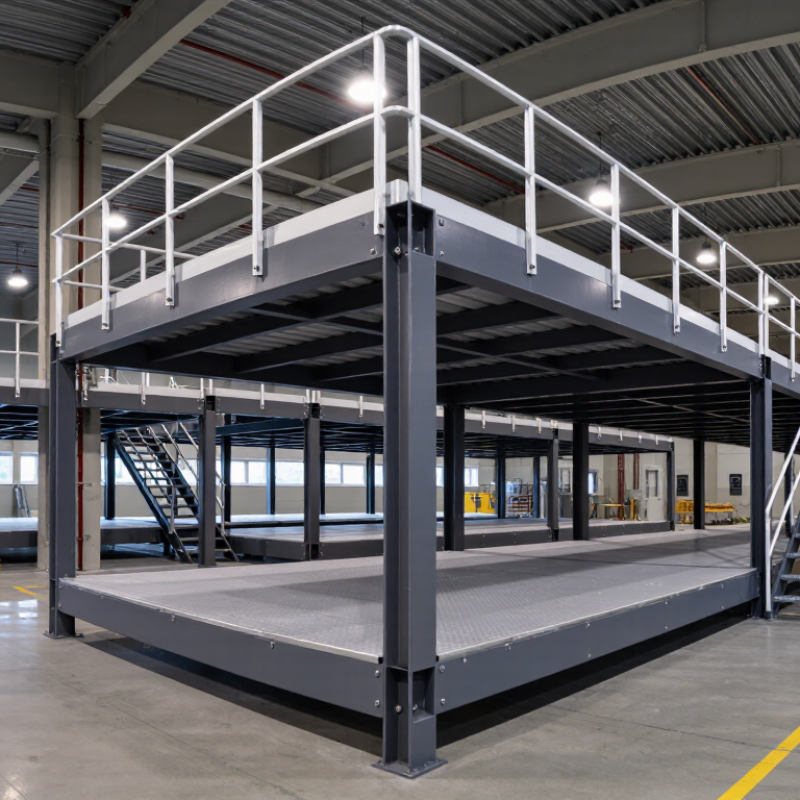
China’s steel platform sector rests on extraordinary industrial scale. The World Steel Association’s World Steel in Figures 2024 reports 1,019.1 million tonnes of crude steel in 2023. That represented approximately 54% of global crude steel output. The global total reached 1,888.2 million tonnes that year. This capacity supports sourcing across coils, plates, bars, billets, and fabricated components.
For global buyers, scale can improve product availability and supplier matching. It may also support flexible order volumes and regional export planning. However, the headline figure can mislead. National output does not prove consistent quality from every platform supplier. A professional review should examine mill certificates, heat numbers, inspection records, production schedules, and applicable standards. Delivery history matters too. A low quotation may hide unclear tolerances, weak packaging, or unstable lead times. These risks deserve attention.
Tips:Request recent, traceable test documents before approving samples. Compare chemical composition, yield strength, tensile strength, and dimensional tolerances. Confirm whether the platform verifies factory capacity or only publishes supplier information. Use independent inspection for higher-value shipments. The 1.019-billion-tonne figure is impressive, but it cannot replace careful verification. Even experienced buyers can overtrust polished listings.
China’s steel platform suppliers should be compared beyond quoted prices. Capacity shows whether a supplier can support repeat orders, while production records reveal practical consistency. Ask for monthly output, equipment details, and recent project references. A supplier with broad export experience usually understands packing, port procedures, and destination documentation. Certifications also matter. Verify quality systems, material traceability, inspection reports, and certificates with issuing bodies. Paperwork alone is not enough.
Tips: Request a clear lead-time schedule. Separate production days from shipping days. Confirm steel grades, dimensions, tolerances, surface treatment, and loading plans in writing. Small details prevent costly delays.
Lead time deserves careful testing. Ask suppliers to quote a sample order and a larger order separately. Compare their promised dates with actual shipment records. During factory discussions, note whether answers are precise or repeatedly vague. That is useful evidence. Capacity can look impressive on paper but become tight during peak seasons. I have seen buyers focus on certifications and overlook packing quality, causing damage before arrival. This is an uncomfortable gap. A balanced selection uses verified capacity, relevant certifications, export experience, and realistic delivery performance. Independent inspection remains sensible, especially for the first order. Suppliers should also explain how they handle nonconforming material, replacement requests, and production changes. Mistakes happen. Reliable suppliers make them visible early.
China Top 10 Steel Platforms Suppliers for Global Buyers
China’s steel platform sector supports factories, warehouses, ports, and energy facilities worldwide. The product range usually includes grating, walkways, stairways, and heavy-duty platforms. According to the World Steel Association’s October 2024 Short Range Outlook, global steel demand was forecast to reach about 1.75 billion tonnes in 2024 and 1.77 billion tonnes in 2025. This scale explains why buyers compare Chinese suppliers for capacity, fabrication control, and export experience.
Grating needs accurate bearing bars, safe openings, and consistent welding. Walkways should provide firm footing near machinery, even when dust or water is present. Stairways require practical tread depth, handrails, and stable landings. Heavy-duty platforms need load calculations, deflection checks, and corrosion protection. ISO 14122 and OSHA walking-working surface guidance both emphasize safe access, structural integrity, and regular inspection. These references help buyers review supplier drawings instead of trusting attractive photographs.
Price still matters. It should not lead the decision. A cheaper coating may fail early in coastal air, while an undersized support frame can create vibration and maintenance problems. Some supplier listings also omit live-load assumptions, which deserves careful questioning. Buyers should request mill certificates, welding procedures, dimensional inspection records, and third-party test evidence. Material grades, tolerances, surface treatment, packaging, and installation instructions should appear clearly in the quotation. Site conditions are easy to underestimate. That is where careful technical review proves its value.
| Rank | Anonymous Supplier Profile | Primary Manufacturing Region | Core Product Coverage | Common Materials | Surface Treatment | Typical Engineering Standards | Standard Panel / Stairway Options | Typical Project Applications | Export Support |
|---|---|---|---|---|---|---|---|---|---|
| 1 | Supplier Profile A | North China | Press-locked grating Walkways Stair treads | Carbon steel, stainless steel 304/316, aluminum | Hot-dip galvanizing, powder coating, mill finish | ASTM A123/A123M; ISO 1461; DIN 24537-1 | Width up to approximately 1,200 mm; custom panel lengths; bolted and welded stair treads | Industrial plants, access platforms, maintenance passages | Shop drawings, packing lists, commercial invoices, export crating |
| 2 | Supplier Profile B | East China | Welded grating Heavy-duty platforms Handrails | Structural carbon steel, stainless steel 304/316 | Hot-dip galvanizing, epoxy primer, painted finish | EN 1090-1; ISO 1461; EN ISO 14122 | Load-oriented welded panels; stair flights and landings made to project drawings | Warehouses, power facilities, steel mills, process equipment areas | Container loading plans, inspection records, assembly marking |
| 3 | Supplier Profile C | North China | Serrated grating Anti-slip walkways Safety stair treads | Low-carbon steel, galvanized steel, stainless steel | Hot-dip galvanizing, black bitumen coating, powder coating | OSHA 1910.23; ANSI/NAAMM MBG 531; ISO 1461 | Serrated surfaces; nosing plates; stair treads with standard carrier bars | Oil and gas sites, wastewater plants, factories, rooftop access | English documentation, third-party inspection coordination, export labeling |
| 4 | Supplier Profile D | Central China | Pressure-locked grating Modular walkways Service platforms | Carbon steel, aluminum, stainless steel 304 | Hot-dip galvanizing, electro-galvanizing, anodizing for aluminum | EN ISO 14122; DIN 24537-1; ISO 9001 quality systems | Removable panels; modular supports; custom cut-outs around equipment | Manufacturing lines, HVAC access, conveyor systems, utility areas | Flat-pack packaging, installation drawings, spare fastener supply |
| 5 | Supplier Profile E | South China | Heavy-duty grating Vehicle-rated platforms Trench covers | Structural carbon steel, galvanized steel, stainless steel 316 | Hot-dip galvanizing, paint systems, duplex coating | ASTM A123/A123M; ASTM A36/A572; EN 1090-1 | Reinforced panels for high point loads; custom support spacing and lifting points | Ports, logistics yards, substations, heavy industrial access areas | Load calculation support, material certificates, export seaworthy packing |
| 6 | Supplier Profile F | East China | Stair systems Platforms Crossover walkways | Carbon steel, galvanized steel, aluminum checker plate | Hot-dip galvanizing, powder coating, anti-slip paint | AS/NZS 1657; EN ISO 14122; ISO 1461 | Fixed stairs, inclined stairs, landings, crossover bridges and guardrails | Mining, food processing, packaging lines, building services | Metric and imperial drawings, component identification, installation manuals |
| 7 | Supplier Profile G | North China | Electro-forged grating Drainage covers Maintenance platforms | Carbon steel, stainless steel 304/316, aluminum | Hot-dip galvanizing, stainless passivation, powder coating | ANSI/NAAMM MBG 531; ASTM A123/A123M; ISO 9001 quality systems | Light- to medium-duty panels; removable covers; custom edge bars | Water treatment, chemical facilities, commercial utilities | Small-batch production, sample approval, mixed-SKU container loading |
| 8 | Supplier Profile H | Southwest China | Heavy-duty stair treads Access platforms Guardrails | Structural steel, stainless steel 316, galvanized steel | Hot-dip galvanizing, industrial paint, zinc-rich primer | EN ISO 14122; ISO 1461; local project specifications | Stair treads with nosing; reinforced landings; platform frames with guardrails | Cement plants, mining projects, energy infrastructure | Fabrication from 2D/3D drawings, weld inspection records, palletized packing |
| 9 | Supplier Profile I | Central China | Custom grating Cable-tray walkways Equipment platforms | Carbon steel, stainless steel, aluminum | Hot-dip galvanizing, powder coating, anodizing | DIN 24537-1; EN 1090-1; ISO 1461 | Non-standard shapes, equipment cut-outs, bolted modular assemblies | Data centers, factories, renewable-energy facilities, machine rooms | CAD confirmation, barcode labeling, consolidated export shipments |
| 10 | Supplier Profile J | South China | Decorative platforms Architectural walkways Stair components | Stainless steel 304/316, aluminum, carbon steel | Brushed finish, mirror polish, powder coating, hot-dip galvanizing | EN ISO 14122; AS/NZS 1657; ISO 9001 quality systems | Custom colors, curved panels, architectural stairs and pedestrian bridges | Commercial buildings, public infrastructure, airports, marine facilities | Color samples, prototype approval, protective film and export-grade packaging |
For global buyers, steel platform verification should begin with the stated load rating. A supplier should provide design calculations, steel grades, weld details, anchor forces, and deflection limits. The rating must separate uniform loads from point loads. Forklift traffic requires impact factors. Outdoor platforms require corrosion allowances.
ISO Survey 2023 recorded more than 1.2 million ISO 9001 certificates worldwide. This figure shows broad adoption, not automatic product quality. Buyers should request the current certificate scope, audit date, nonconformity records, and inspection plans. A certificate covering trading activities may not cover fabrication. That distinction matters.
EN 1090 verification should identify the execution class, factory production control, welding qualifications, and traceability records. ASTM compliance must name the exact standard, such as material, bolt, coating, or test requirements. “ASTM compliant” alone is too vague. World Steel Association data reported about 1.89 billion tonnes of crude steel production in 2023, making heat-number tracking increasingly important across large supply chains. In practical audits, stamped drawings sometimes differ from the delivered frame. That is an uncomfortable but common weakness. Independent dimensional checks, weld visual inspection, coating-thickness readings, and documented load testing can expose it. Yet proof testing cannot replace engineering calculations, especially where fatigue, vibration, or repeated loading is involved.
Reference benchmarks for load-rating reviews, ISO 9001, EN 1090, and ASTM compliance
The chart compares published minimum yield-strength benchmarks for commonly specified structural steel grades: ASTM A36: 250 MPa, EN S275: 275 MPa, ASTM A572 Grade 50: 345 MPa, and EN S355: 355 MPa. ISO 9001 verifies a supplier’s quality-management system, while EN 1090 verifies the execution requirements for steel and aluminium structures. Actual platform load ratings must be confirmed through structural calculations, connection design, material certificates, welding records, and project-specific engineering review.
For global buyers comparing the China top 10 steel platforms suppliers, the quoted mill price is only the starting point. The World Steel Association reported about 1.88 billion tonnes of crude steel production in 2024. That scale creates price differences between regions, grades, and delivery windows. A low offer may exclude coating, inspection, inland trucking, or export documentation. Ask for a complete cost sheet.
Freight can change the decision quickly. UNCTAD’s Review of Maritime Transport 2024 highlighted continuing route disruptions and unstable shipping costs. A 20-foot container of steel may face extra charges for congestion, rerouting, storage, and port handling. Duties also depend on the buyer’s country, product classification, origin rules, and trade remedies. The World Trade Organization’s tariff data shows that applied rates vary significantly across steel categories and markets. Check the tariff before signing.
Delivery risk deserves a physical test. Request mill certificates, sample measurements, loading photos, and a pre-shipment inspection. Compare the landed cost, not the website price.
Our estimate may still be imperfect. Port delays and currency movements can defeat a careful spreadsheet. Use staged payments and realistic buffer days. Cheap steel is not cheap when production waits beside an empty loading bay.
China produced about 1.019 billion tonnes of crude steel in 2023. That represented roughly 54% of global output. Scale helps. It does not guarantee quality.
Common products include grating, walkways, stairways, and heavy-duty platforms. Suppliers may also provide coils, plates, bars, billets, and fabricated parts. Always confirm the exact product scope.
Compare verified capacity, certifications, export experience, and actual delivery records. Request monthly output and recent project references. A polished listing proves very little.
Request mill certificates, heat numbers, inspection reports, and welding procedures. Check chemical composition, yield strength, tensile strength, and dimensional tolerances. Traceability matters.
Ask for separate production and shipping schedules. Compare sample-order promises with larger-order commitments. Review past shipment records when possible. Vague answers deserve attention.
The quotation should state steel grades, dimensions, tolerances, surface treatment, packaging, and loading plans. It should also identify installation instructions and inspection arrangements. Missing details create avoidable confusion.
Walkways need stable footing near dust, water, and machinery. Stairways need practical tread depth, secure handrails, and stable landings. Drawings should address access safety and structural integrity.
Ask for load calculations, deflection checks, support details, and corrosion protection. Confirm the live-load assumptions. Some listings omit them, unfortunately.
Independent inspection is sensible for first orders and higher-value shipments. Inspectors can check dimensions, welding, coating, packing, and material records. I would not rely on photographs alone.
A low price may reflect weak packaging, unclear tolerances, unstable lead times, or thin coating. Coastal air can expose poor corrosion protection quickly. Cheap is not always efficient.
China’s steel platform sector offers global buyers a broad and competitive sourcing base, supported by approximately 1.019 billion tonnes of crude steel production in 2023. This guide explains how to evaluate the top suppliers by manufacturing capacity, quality certifications, export experience, production flexibility, and lead time. It also reviews product coverage, including steel grating, industrial walkways, stairways, access structures, and heavy-duty platforms for demanding applications.
For reliable procurement, buyers should verify load ratings, material traceability, welding quality, dimensional accuracy, and compliance with standards such as ISO 9001, EN 1090, and ASTM requirements. The comparison also considers total purchasing costs, including steel prices, fabrication, packaging, freight, import duties, and delivery risks. By assessing technical capability and landed cost together, international buyers can select Steel Platforms suppliers that provide consistent quality, practical customization, and dependable project support.

Hedaracking