Top 10 Narrow Aisle Storage Manufacturers in China

Time:2026-09-29 Author:Sophia
0%

Narrow Aisle Storage can help warehouses use floor space more efficiently while keeping pallet access organized. The right system depends on more than rack height. Aisle width, pallet dimensions, load weight, forklift type, floor condition, and sprinkler layout all matter. Small details count. A drawing that looks efficient on a screen may feel different once forklifts turn between loaded bays.

This guide introduces ten Narrow Aisle Storage manufacturers in China for buyers comparing potential suppliers. It offers a practical starting point, not a definitive ranking: product ranges and service capabilities can change, and a strong fit for one warehouse may not suit another. When reviewing a manufacturer, look for clear load calculations, project references, installation guidance, and support for replacement components. Ask how the proposed design handles your actual pallet sizes and daily traffic. Request drawings and specifications before comparing quotations. Price matters, of course, but so do coating quality, connection details, and delivery schedules. Verify each claim directly. No catalog tells the whole story. Some projects also reveal awkward constraints only after a site survey, so leave room for reassessment. Use the list to shape better questions, then confirm the details against your facility, budget, and operating plans.
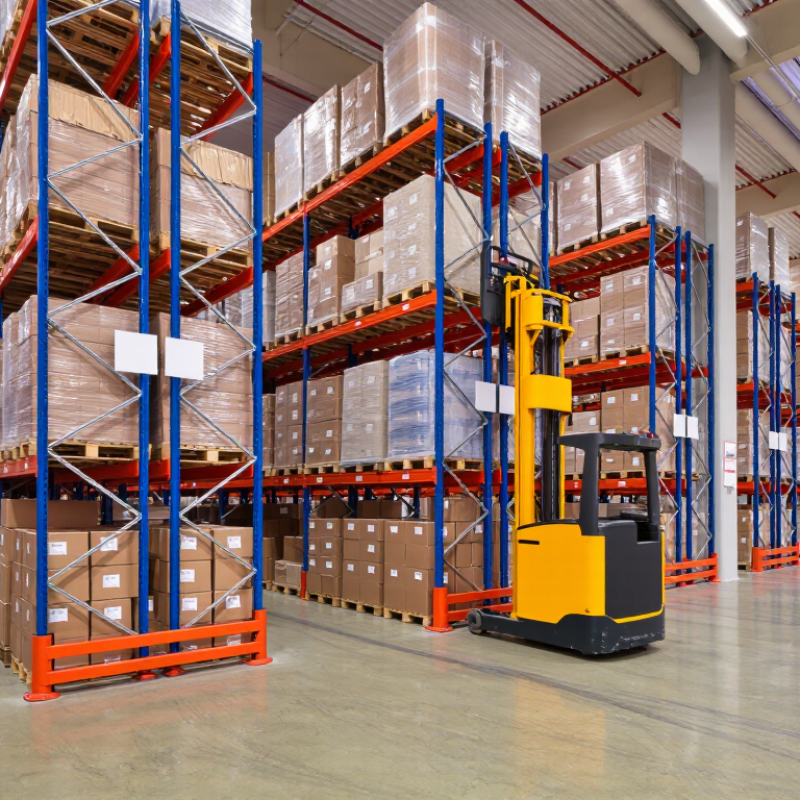
Top 10 Narrow Aisle Storage Manufacturers in China

Definition and Role of Narrow Aisle Storage Systems

Top 10 Narrow Aisle Storage Manufacturers in China: Definition and Role of Narrow Aisle Storage Systems

Narrow aisle storage systems use reduced rack spacing and specialized lift equipment. They help warehouses store more pallets within the same floor area. Typical aisle widths range from 1.5 to 2.0 meters, depending on the truck and pallet design. This layout suits facilities with high stock variety, limited land, and frequent order picking. The 2024 MHI Annual Industry Report found that 83% of supply chain professionals expect to increase technology investment over the next five years. Narrow aisle equipment fits this direction, but it is not an automatic solution.

In practice, the system improves vertical space use and can shorten travel routes. Operators may gain capacity without expanding the building. However, narrower aisles require accurate driving, stable floors, clear signage, and trained workers. A small pallet overhang can reduce safety and disrupt movement. The system also performs poorly when inventory turns slowly or pallet sizes vary widely. That detail is often overlooked. Industry guidance from the Occupational Safety and Health Administration emphasizes training, inspection, and safe powered-industrial-truck operation.

Tips: Measure actual pallet dimensions, rack height, floor flatness, and daily forklift movements before selection. Leave practical clearance for turning and maintenance, not only the minimum design width. Test one aisle during peak activity. A computer model may look perfect, yet real handling can prove different. Track storage density, picking time, damage rates, and near-miss events after installation.

Narrow Aisle Storage Systems: Typical Aisle Width Requirements

Narrow aisle storage systems reduce the space required for forklift travel, allowing warehouses to increase pallet positions within the same building footprint. The values shown are representative planning figures for common material-handling equipment; actual aisle requirements vary by truck model, pallet size, rack configuration, load height, and operating conditions.

Key Criteria for Evaluating Chinese Manufacturers

Evaluating the Top 10 Narrow Aisle Storage Manufacturers in China requires more than comparing catalog prices. Start with engineering evidence, not polished photographs. Request load tables, aisle-width drawings, deflection limits, and test records for the exact rack configuration. The International Federation of Robotics reported 276,288 industrial robot installations in China during 2023, representing 51% of global installations. This indicates strong manufacturing capacity, but automation experience alone does not prove storage safety.

Check whether each manufacturer controls welding, coating, and final inspection internally. Visit a production line if possible. Look for calibrated torque tools, batch labels, and traceable steel certificates. Ask for references using similar pallet weights and forklift types. ISO 9001 certification supports process control, yet it cannot replace site-specific testing. The 2023 World Bank Logistics Performance Index gave China a score of 3.7, reflecting capable logistics infrastructure, but delivery performance still varies between regions and factories.

Commercial terms need equal attention. Compare spare-part lead times, installation supervision, warranty exclusions, and response procedures for damaged uprights. A useful supplier should explain tolerances in plain language. Be cautious when a quotation omits floor-flatness requirements or seismic assumptions. That omission may be accidental, or it may reveal weak engineering discipline. I would also score digital design capability, because a narrow aisle system can fail through poor warehouse data, not poor steel. Some evaluations remain imperfect; factory visits can favor presentation over long-term performance.

Top 10 Narrow Aisle Storage Manufacturers in China

Top 10 Narrow Aisle Storage Manufacturers in China

The top 10 narrow aisle storage manufacturers in China serve warehouses where every meter matters. Their products commonly include pallet racking, mobile shelving, carton flow systems, and automated storage equipment.

A reliable manufacturer should provide load calculations, aisle planning, steel specifications, and installation guidance. Product brochures alone are not enough.

In warehouse audits, I examine beam deflection, upright thickness, floor flatness, and forklift clearance. These details affect daily safety and storage density. The strongest manufacturers support custom layouts for cold rooms, e-commerce facilities, spare-parts stores, and factories.

They also offer testing records, traceable materials, and practical maintenance instructions. Some suppliers provide impressive drawings but weak after-sales response. That difference becomes obvious after installation.

A useful comparison of China’s top 10 manufacturers should consider engineering experience, production capacity, export performance, and quality controls. It should also check whether the supplier understands local building conditions and operating habits.

Short aisles can increase capacity, but poor turning space may reduce productivity. That mistake is easy to make. Buyers should request a sample calculation using actual pallet dimensions, load weights, forklift models, and ceiling height.

Site measurements should be verified twice. Even experienced teams can overlook sprinkler clearance or uneven concrete. A transparent manufacturer will discuss these limitations before accepting an order.

Product Features and Industry Applications

China’s leading narrow aisle storage manufacturers typically engineer systems for warehouses where every square meter matters. Their product ranges often include narrow aisle pallet racks, guide rail solutions, reach trucks, and adjustable beam structures. Aisle widths should match equipment, pallet size, and turning radius, not guesswork. Upright frames use formed steel, reinforced bases, and protective guards. Beam locks and load labels support safer daily operation. Some suppliers offer seismic calculations and customized layouts, but buyers should verify test standards and actual load data.

In appliance, beverage, spare-parts, and e-commerce warehouses, these systems increase vertical storage without expanding the building footprint. Narrow aisles suit high-density pallet storage and frequent picking zones. A guided truck may reduce steering errors near rack columns. Selective access remains practical when many stock keeping units need direct retrieval. For slower-moving goods, higher levels can improve capacity. Floor flatness, fire protection, lighting, and forklift specifications must be checked together. A rack may perform well on paper and fail operationally when floor tolerances are ignored.

Experienced manufacturers usually provide site surveys, load calculations, installation drawings, and maintenance guidance. Ask for material certificates, weld inspection records, coating details, and references from comparable facilities. Digital monitoring can track impacts, occupancy, and inspection dates, though sensors add cost and require disciplined data management. No design is perfect. I have seen layouts optimized for capacity but weakened by poor pedestrian separation. Rechecking traffic flow after installation is worthwhile. A small clearance mistake can become a daily delay.

How to Select the Right Manufacturer for Your Needs

How to Select the Right Narrow Aisle Storage Manufacturer in China

Choosing among China’s narrow aisle storage manufacturers requires more than comparing prices. MHI’s 2024 Annual Industry Report found that 55% of supply chain leaders increased technology investment. This signals a practical shift toward measurable warehouse performance. Ask each manufacturer for load calculations, aisle-width tolerances, seismic considerations, and proof of comparable installations. A polished catalogue is not enough.

Request drawings for your actual pallet size, forklift model, ceiling height, and floor condition. The manufacturer should explain beam deflection, rack protection, corrosion treatment, and inspection procedures in clear language. Interact Analysis reports that warehouse automation adoption continues to expand as labor pressure and service expectations rise. Therefore, check whether the supplier can integrate storage with scanners, warehouse software, and future automation. Compatibility matters more than impressive equipment.

Visit a working installation, if possible. Observe damaged uprights, pallet alignment, and operator visibility. Ask for testing records based on recognized engineering standards, material certificates, warranty limits, and spare-part lead times. A local service team can reduce downtime, but only if response times are written into the contract. Cost calculations should include installation, maintenance, training, and possible floor repairs. The cheapest quotation may become expensive after one overlooked detail. I would also compare two or three technical proposals independently. My first choice might still be wrong. That uncertainty deserves a documented review.

FAQS

What is a narrow aisle storage system?

It uses reduced rack spacing and specialized lifting equipment. Typical aisles measure 1.5 to 2.0 meters.

Which warehouses benefit most from narrow aisles?

They suit facilities with limited floor space, varied inventory, and frequent pallet picking. Slow-moving stock may not benefit much.

How can narrow aisles increase warehouse capacity?

They use more vertical space and may store additional pallets without building expansion. The result depends on rack height and equipment.

What should be measured before selecting this system?

Measure pallet dimensions, rack height, floor flatness, ceiling height, and daily forklift movements. Small errors matter.

Why do narrow aisles require careful operation?

Reduced space demands accurate driving, clear signs, stable floors, and trained workers. A small pallet overhang can block movement.

Can every forklift operate in a narrow aisle?

No. The truck must match the aisle width, rack height, pallet design, and turning requirements. Confirm this with actual measurements.

What information should a manufacturer provide?

Request load calculations, aisle tolerances, seismic considerations, drawings, deflection data, protection details, and inspection procedures.

Should a warehouse test the system before full installation?

Yes. Test one aisle during busy operations. A computer model may look perfect, while real handling reveals awkward turns.

What service details belong in the contract?

Include response times, warranty limits, spare-part availability, training, inspection duties, and maintenance responsibilities. Vague promises can cause delays.

How should total costs be compared?

Include equipment, installation, training, maintenance, software integration, and possible floor repairs. The cheapest quote may not stay cheap.

Conclusion

This article provides a practical overview of Narrow Aisle Storage systems, explaining how they maximize warehouse capacity while maintaining efficient access to goods. It introduces the role of specialized racking, compatible handling equipment, and organized warehouse layouts in improving storage density, inventory control, and operational productivity. The article also outlines key criteria for evaluating Chinese manufacturers, including product quality, engineering capability, customization options, safety standards, manufacturing capacity, delivery reliability, and after-sales support.

A ranking of the top 10 Narrow Aisle Storage manufacturers in China is presented through a neutral comparison of their typical strengths and service capabilities, without focusing on brand promotion. The article further discusses product features and applications across industries such as logistics, retail, manufacturing, and distribution. Finally, it offers practical guidance on selecting the right manufacturer according to warehouse dimensions, load requirements, budget, automation plans, installation needs, and long-term maintenance expectations.

Sophia

Sophia

Sophia is a dedicated marketing professional with an exceptional depth of knowledge about her company's products and services. With a keen understanding of market trends and customer needs, she crafts insightful blog posts that not only inform but also engage readers, enriching the company’s online......